Tuesday, October 6, 2009

The world's rubbish dump: a tip that stretches from Hawaii to Japan

A "plastic soup" of waste floating in the Pacific Ocean is growing at an alarming rate and now covers an area twice the size of the continental United States, scientists have said.

The vast expanse of debris – in effect the world's largest rubbish dump – is held in place by swirling underwater currents. This drifting "soup" stretches from about 500 nautical miles off the Californian coast, across the northern Pacific, past Hawaii and almost as far as Japan.

Charles Moore, an American oceanographer who discovered the "Great Pacific Garbage Patch" or "trash vortex", believes that about 100 million tons of flotsam are circulating in the region. Marcus Eriksen, a research director of the US-based Algalita Marine Research Foundation, which Mr Moore founded, said yesterday: "The original idea that people had was that it was an island of plastic garbage that you could almost walk on. It is not quite like that. It is almost like a plastic soup. It is endless for an area that is maybe twice the size as continental United States."

Curtis Ebbesmeyer, an oceanographer and leading authority on flotsam, has tracked the build-up of plastics in the seas for more than 15 years and compares the trash vortex to a living entity: "It moves around like a big animal without a leash." When that animal comes close to land, as it does at the Hawaiian archipelago, the results are dramatic. "The garbage patch barfs, and you get a beach covered with this confetti of plastic," he added.

The "soup" is actually two linked areas, either side of the islands of Hawaii, known as the Western and Eastern Pacific Garbage Patches. About one-fifth of the junk – which includes everything from footballs and kayaks to Lego blocks and carrier bags – is thrown off ships or oil platforms. The rest comes from land.

Mr Moore, a former sailor, came across the sea of waste by chance in 1997, while taking a short cut home from a Los Angeles to Hawaii yacht race. He had steered his craft into the "North Pacific gyre" – a vortex where the ocean circulates slowly because of little wind and extreme high pressure systems. Usually sailors avoid it.

He was astonished to find himself surrounded by rubbish, day after day, thousands of miles from land. "Every time I came on deck, there was trash floating by," he said in an interview. "How could we have fouled such a huge area? How could this go on for a week?"

Mr Moore, the heir to a family fortune from the oil industry, subsequently sold his business interests and became an environmental activist. He warned yesterday that unless consumers cut back on their use of disposable plastics, the plastic stew would double in size over the next decade.

Professor David Karl, an oceanographer at the University of Hawaii, said more research was needed to establish the size and nature of the plastic soup but that there was "no reason to doubt" Algalita's findings.

"After all, the plastic trash is going somewhere and it is about time we get a full accounting of the distribution of plastic in the marine ecosystem and especially its fate and impact on marine ecosystems."

Professor Karl is co-ordinating an expedition with Algalita in search of the garbage patch later this year and believes the expanse of junk actually represents a new habitat. Historically, rubbish that ends up in oceanic gyres has biodegraded. But modern plastics are so durable that objects half-a-century old have been found in the north Pacific dump. "Every little piece of plastic manufactured in the past 50 years that made it into the ocean is still out there somewhere," said Tony Andrady, a chemist with the US-based Research Triangle Institute.

Mr Moore said that because the sea of rubbish is translucent and lies just below the water's surface, it is not detectable in satellite photographs. "You only see it from the bows of ships," he said.

According to the UN Environment Programme, plastic debris causes the deaths of more than a million seabirds every year, as well as more than 100,000 marine mammals. Syringes, cigarette lighters and toothbrushes have been found inside the stomachs of dead seabirds, which mistake them for food.

Plastic is believed to constitute 90 per cent of all rubbish floating in the oceans. The UN Environment Programme estimated in 2006 that every square mile of ocean contains 46,000 pieces of floating plastic,

Dr Eriksen said the slowly rotating mass of rubbish-laden water poses a risk to human health, too. Hundreds of millions of tiny plastic pellets, or nurdles – the raw materials for the plastic industry – are lost or spilled every year, working their way into the sea. These pollutants act as chemical sponges attracting man-made chemicals such as hydrocarbons and the pesticide DDT. They then enter the food chain. "What goes into the ocean goes into these animals and onto your dinner plate. It's that simple," said Dr Eriksen.

Google partners on device to monitor home energy

Google Inc is partnering with privately held Energy Inc to provide households with free energy management software, bypassing utilities' smart meters and potentially boosting energy efficiency, the company said on its blog on Monday.

Google launched in February a Web tool called PowerMeter, which lets consumers monitor how much electricity they use at home. The catch was that they had to have a smart meter installed by their utility. For the past few months, a few hundred customers have tested the software.

Now, consumers can buy Energy Inc's power-usage measuring device, called TED 5000, costing about $200 (£125), and use Google's software on top of it, without ever needing a smart meter.

The partnership between Energy Inc and Google's philanthropic arm is intended to expand the consumer market. While more and more utilities are moving to install smart meters, they still account for a small percentage of all U.S. electricity meters.

The partnership is nonexclusive and does not include financial terms, the company said. Google will continue working with its partner utilities, which include Sempra Energy's San Diego Gas & Electric and Germany's Yello Strom.

Internet behemoth Google is widely known for its online advertising and search engine, but it is also making forays into clean technology.

Its projects include ways to write software to connect plug-in hybrid vehicles to the power grid and a mirror technology that could reduce the cost of building solar thermal plants by a quarter or more.

Technology companies like Google and IBM Corp are shifting into the world of building a smart grid, envisioning a more efficient electricity grid that uses more renewable energy and powers up 'smart' appliances.

Thursday, July 16, 2009

Patents in Biotechnology: Potential Impacts on Life Expectancy and Hunger

As changes in food requirements and healthcare continue to be major issues across the globe, the biotechnology industry is escalating its role as a leader in adaptation. From genetic engineering to gene mutation, the biotechnology industry is devising new ways for us to think about our health and agriculture. As the biotechnology industry expands this scientific creativity, it is simultaneously pushing the boundaries of genetic patenting. However, could these new ideas in patenting also alter the way we understand life expectancy and hunger?

In a recent article in the American Bar Association Journal, Brendan Smith notes how biotechnology patents may be reducing the life expectancy of one cancer patient. The patient possesses a mutant gene that has been patented by one biotechnology company “pre-empt[ing] research over an entire body of knowledge,” according to Chris Hansen from the American Civil Liberties Union. Consequently, to determine if this mutated gene puts her at risk for breast cancer, she is obligated to pay this company the costs for genetic testing necessary for treatment, some $3,200 (US). Sadly, she cannot afford the amount and her life is at risk.

The difference between human and plant genes is slim, although patents associated with their technology have differed. In the past, patents on plant seed utility have been more relevant to farming with genetically modified plants than genetic patenting itself. Farmers have been more likely to be threatened by patents driving seed use than costs associated with genetic research. For example, a Canadian farmer was sued for patent infringement for unlicensed seed use in the Canadian court case, Monsanto Canada, In. v. Schmeiser.

However, suppose farmers become inundated with crop threatening plants, or “super-weeds” possessing patented mutated genes, like the gene in the cancer patient. And, suppose the farmer wanted to prevent damage to his crops from the mutated plants, similarly to the cancer patient trying to prevent life damage from the cancer gene. Perhaps, because of the patent, the costs associated with testing and research to remedy his crops would be, also, so pricey that the farmer would not be able to pay.

According to Brian Johnson, an ecological geneticist from England, an event like this would be possible. “Super-weeds” have the capability of multiplying rapidly, threatening and destroying crops and surrounding farm lands. For food growers providing crops to low income countries, such a case would be detrimental. Not only would a scenario like this destroy food crops, but conversely could cause soaring food prices if testing and research were to occur. This could potentially lead to increased hunger or even agricultural land use changes.

Innovations in the biotechnology industry have vast societal impacts. Yet, debates over the patents protecting this industry underscore the risks and opportunities associated with its new technologies. Timely research and stakeholder involvement are undoubtedly essential for better understanding this industries limitations and capabilities, particularly in its contributions to human health and the environment.

by Candy Schibli

Friday, July 3, 2009

Greenpeace Releases Annual Green Electronics Rankings

greenpeace-guide

Greenpeace International has released its annual "Guide to Greener Electronics" where it ranks leading electronics companies on their policies towards toxic chemicals, recycling and climate change. This year, PC makers made up the bottom of the list, Apple floated somewhere in the middle and cell phone makers got the highest marks. Below is the list with each company's score from 1 - 10 (10 being the best) with the brief explanation of the score provided by Greenpeace.

  • 7.45 Nokia - Scores top marks for leading competitors on toxic phase out.
  • 7.1 Samsung - Holds second position for commitment to reduce absolute emissions.
  • 6.5 Sony Ericsson - Up two places with better product energy efficiency reporting.
  • 5.7 LG Electronics - Up two places but needs to eliminate hazardous chemicals from all products.
  • 5.5 Toshiba - Moves up two places with an extra point for promising to cut GHGs.
  • 5.5 Motorola - Scores higher and climbs two places because of use of renewable energy
  • 5.3 Philips - Falls from 4th to 7th position and needs to put its commitment to responsible recycling policies into practice.
  • 5.3 Sharp - Rises from 9th to joint 7th place with its energy efficient products.
  • 4.9 Acer - Put out 16 new models of a monitor that are almost free of hazardous chemicals and climbed two places from 11 to 9 but still needs to sort out the power cord.
  • 4.9 Panasonic - Advance from 12th to 10th place for energy efficiency and PVC-free product range, but still bad on e-waste.
  • 4.7 Apple - Drops one position to 11th with no change in scores but gets kudos for their green MacBook.
  • 4.5 Sony - Plunges from 5th to 12th place for inadequate commitments on eliminating hazardous chemicals, e-waste policy and cutting GHGs.
  • 3.9 Dell - Stays at 13th place because of backtracking on toxic phase out.
  • 3.5 HP - Is at 14th position and has no products on the market free of toxic substances.
  • 2.5 Microsoft - Loses a point for a poor recycling policy but stays in 15th position.
  • 2.5 Lenovo - Down two places with no set timeline for toxic phase out on all products.
  • 2.4 Fujitsu - Debuts second from last with no products that are free of hazardous chemicals.
  • 1 Nintendo - Stays put in last position with a glimmer of hope with partially PVC-free consoles.
As you can see, this year PC makers were highly criticized for either backtracking on commitments to remove hazardous chemicals from their products or not producing a policy to do so at all. You can download a PDF of the full scorecard here.
via Greenpeace International

Written by Megan Treacy

Pacific Northwest Forests Could Store More Carbon, Help Address Greenhouse Issues

The forests of the Pacific Northwest hold significant potential to increase carbon storage and help mitigate greenhouse gas emissions in coming years, a recent study concludes, if they are managed primarily for that purpose through timber harvest reductions and increased rotation ages.

In the complete absence of stand-replacing disturbances – via fire or timber harvest – forests of Oregon and Northern California could theoretically almost double their carbon storage.

Although it isn't realistic to expect an absence of disturbance, the estimates were based on average conditions up until now that include variation in forest biomass, age, climate, disturbances and soil fertility. If all forest stands in this region were just allowed to increase in age by 50 years, their potential to store atmospheric carbon would still increase by 15 percent, the study concluded.

That would be a modest, but not insignificant offset to the nation's carbon budget, scientists say, since this region accounts for 14 percent of the live biomass in the entire United States.

The findings were made by scientists in the College of Forestry at Oregon State University, as the result of almost two decades of analysis of 15,000 inventory plots in a large region, through several different projects, as part of the North American Carbon Program. The scientists, who said they have often been asked what the theoretical potential was for storing carbon in these forests, conducted the analysis using inventory data that captured current variation in biomass due to many factors. Read more

Adapted from materials provided by Oregon State University, via EurekAlert!, a service of AAAS.

Friday, June 26, 2009

Gordon Brown puts $100bn price tag on climate adaptation

climate change in Bangladesh

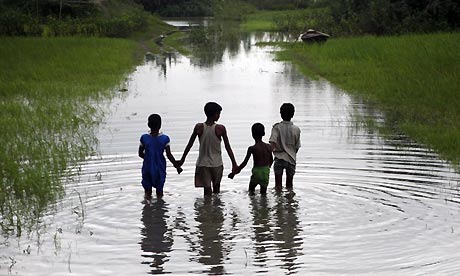
Flooding in Bangladesh: The annual $100bn falls well short of what developing nations have demanded in climate funding. Photograph: Hassan Bipul/DFID

Gordon Brown today attempted to seize the political initiative on climate change by calling for rich countries to hand over $100bn (£60bn) each year to help the developing world cope with the effects of global warming.

In a speech at London zoo, the prime minister said the cash offer was intended to break the political stalemate over a new global deal on greenhouse gas emissions. He said the "security of our planet and our humanity" rested on such a treaty being agreed at key UN negotiations in Copenhagen in December.

"Over recent years the world has woken to the reality of climate change. But the fact is that we have not yet joined together to act against it. Copenhagen must be the moment we do so," Brown said. "As always, this will involve a calculus of national and collective interests, with each yielding something for the common good."

Aides said the speech was intended to provide fresh momentum to the stalling political talks on global warming. In exchange for greater action on climate as part of a new deal, the developing world wants money to help it cut carbon emissions and adapt to a warmer world. Earlier this month, EU leaders postponed a decision on such funds until October.

Brown said: "If we are to achieve an agreement in Copenhagen, I believe we must move the debate from a stand-off over hypothetical figures to active negotiation on real mitigation actions and real contributions."

Under the plan, funding would begin in 2013 and rise to $100bn a year by 2020. The money would be raised from private and public sources, such as levies on international carbon trading schemes. Developing countries would be able to apply for funds for specific projects. "I would urge the leading developing countries to bring forward ambitious and concrete propositions ... that could be financed by these sources," Brown said.

Brown is expected to discuss the plan with world leaders including Barack Obama. Because the UK will negotiate at Copenhagen as part of the EU-bloc, the suggestion will have to be agreed in Brussels before it could be put forward as a formal offer as part of the Copenhagen negotiations.

The annual $100bn falls well short of what China and other developing nations have demanded in climate funding. The G77 group of nations has suggested that rich countries could hand over 1% of their GDP, a figure that British government sources consider unfeasible. "That's a totally unrealistic number. It doesn't even bring us to the negotiating table," one said.

Green campaigners welcomed the speech but were unhappy with the reliance on carbon markets to generate the necessary funds.

Greenpeace said: "Brown is right when he says the scale of the money on the table for the developing world will make or break Copenhagen. By becoming the first major leader to put a figure on how much money is needed he has shown signs of leadership on climate change that have so far been sorely lacking."

David Adam, environment correspondentguardian.co.uk, Friday 26 June 2009


Wednesday, June 24, 2009

Two Thirds of Americans Would Refuse to Give Up iPod - Even if it Ruined Environment

An astonishing new survey has revealed that more than 60% of Americans would refuse to stop using their iPods, even if they knew it was seriously damaging the environment.

The survey, which quizzed more than 1,000 people across the US, found that, whilst the majority of Americans are making efforts to buy greener products, most wouldn’t do so if it meant compromising on convenience or comfort.

Presented with a choice between comfort, convenience or the environment, 38 percent of those questioned said they’d choose their convenience, 36 percent comfort and just 26 percent the environment.

According to market researcher Suzanne Shelton, “Consumers don’t want to give up the modern conveniences of life. We’re all basically saying, ‘I’ll be green as long it doesn’t make me uncomfortable or inconvenienced.’”

» See also: Recycling In San Francisco Made Easy With The iPhone, by Mayor Newsom

In further findings, when asked, “If you thought these things were harming the environment, which of the following would you be willing to give up?” well under 50 percent of those polled were prepared to give up the following items:

  • iPod - 38 percent would be willing to do without it
  • Dishwasher - 35 percent
  • Microwave - 25 percent
  • Cellular phone - 21 percent
  • Air conditioning - 14 percent
  • TV - 13 percent
  • Computer - 7 percent
  • Car - 6 percent
  • None of the above - 21 percent
  • All of the above - 6 percent

Commenting on the findings Shelton said, “For most Americans, what once were considered conveniences have become necessities. That means the green movement has its work cut out for it: Convenience and comfort are big barriers for consumers going green.

“It means a lot of people simply won’t take on green projects, or buy a green product if they have to go to a different store to find it or if it somehow takes away from their personal comfort.”

by Andrew Williams

Monday, June 22, 2009

Madascar: Daewoo's Rainforest land grab in Natures Paradise

The island of Madagascar is a veritable Noah's Ark of biodiversity, and this natural wealth is the country's primary treasure and opportunity for future ecologically sustainable development. The Korean company Daewoo Logistics intends to lease half the agricultural land in Madagascar for 99 years, industrially producing maize and palm oil on 1.3 million hectares that are now biodiversity rich rainforests and gardens. There already exists a severe food crisis nationally and local peoples, who are soon to be dispossessed from their land, are protesting, causing a major government crisis. Tell Daewoo the people of Madagascar have spoken -- and to shove off and leave Madagascar's rainforests, peoples and land alone.

By Rainforest Portal, a project of Ecological Internet

Fate of Whaling Ban Hangs in the Balance as Pro and Anti-Whaling Countries Face Off

We'd like to think of whaling as an outdated practice, largely frowned upon and done only by a handful of persistent nations around the world. And so it is, for the most part--whaling has declined dramatically over the last 20 years. But all that could change. The International Whaling Commission is meeting in Portugal, and the focus of the conference is likely to revolve around the increasingly contentious worldwide whaling ban that was adopted by the IWC in 1986. Nations that still actively engage in whaling, led by Japan, Norway, and Iceland, are leading the charge to keep whales off endangered species lists--and for a full on return to legal whaling.
Read more
by Brian Merchant, Brooklyn, New York on 06.22.09
Human alteration of Earth is substantial and growing. Between one-third and one-half of the land surface has been transformed by human action; the carbon dioxide concentration in the atmosphere has increased by nearly 30 percent since the beginning of the Industrial Revolution; more atmospheric nitrogen is fixed by humanity than by all natural terrestrial sources combined; more than half of all accessible surface fresh water is put to use by humanity; and about one-quarter of the bird species on Earth have been driven to extinction. By these and other standards, it is clear that we live on a human-dominated planet.